
A chronic burning, stinging, or itching sensation in the vulva area with no clear cause – lasting for months, often even years: vulvodynia is extremely distressing. The Collaborative Research Center 289 “Treatment Expectation” is committed to better informing the public about this disease – and making therapies more effective for those affected.
Between five and ten percent of all women suffer from unbearable pain in the external genital area during their lifetime. For many of them, even everyday activities such as riding a bike become impossible. In Germany, vulvodynia often remains undiagnosed for years. Those affected experience not only physical but also psychosocial stress. This condition is largely unknown to the general public, and those affected struggle for recognition and adequate support.
When the diagnosis is finally made, many of those affected are faced with the task of thoroughly informing themselves about the condition, as they are often left to their own devices on their path to recovery. Although a multimodal treatment approach exists, its effectiveness is so individual that it remains unclear what ultimately provides relief. Such a situation can promote negative expectations—and thus complicate attempts at therapy.
Vulvodynia: Pain in the genital area is a major taboo
Photographer Celia Joy Homann has set herself the goal of raising public awareness of chronic pain in the genital area. As part of her Bachelor thesis, she has designed an exhibition that aims to break the taboo surrounding vulvodynia and offers suggestions for improving communication between healthcare professionals and patients. Her artistic photographic approach describes a new dimension in conveying information about chronic pain and promotes education about chronic pain in the genital area.
The CRC supports Homann's photography project, which was on display as an exhibition in Dortmund in August 2025. A photo book with interviews with those affected and contributions from doctors from various therapeutic fields will be published to accompany the exhibition.
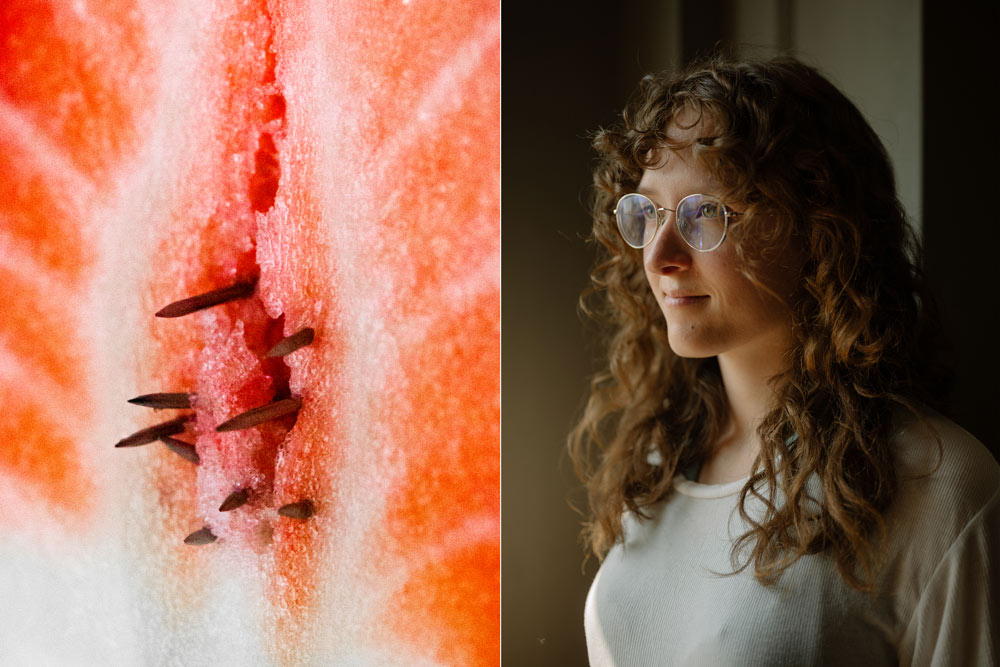
Photo project on vulvodynia: In an interview, the photographer explains her communication approach
In her photographic work, Celia Joy Homann focuses on the still barely-known diagnosis of vulvodynia. Her images make pain visible that is rarely talked about in our society. Intimate portraits and atmospheric imagery create a visual space in which the invisible takes on a tangible form. The aim of the work is to raise awareness and break the taboo surrounding chronic pain in the genital area.
Ms. Homann, what prompted you to address the topic of vulvodynia?
The idea to create a project about vulvodynia arose from a desire to open up the topic and make it more visible. I was shocked to learn that vulvodynia exists, that so many women are affected by it—and yet so little is known about it. Even though topics related to the vulva are now being discussed more openly and many people are informed about vaginism or endometriosis, hardly anyone knew what vulvodynia was—myself included.
What was your initial impulse for the artistic realization?
When you search for information about vulvodynia online, you almost always come across articles with a similar image as the lead. Most of these images show women holding their stomachs and grimacing in pain – as if they were nauseous. I found this type of representation inappropriate. Because the pain is not located in the abdomen, but in the vulva – on the outside, as well as in the entrance area.
I wanted to find imagery that more accurately and tangibly describes how this pain manifests itself. A visual language that boldly shows the problem – without slipping into vulgarity or shame. A language that does justice to the experiences and in which those affected can see themselves reflected.
The lack of such forms of representation of female pain gave rise to my initial impulse: to develop a new visual world that not only “shows” but also allows people to “feel.”
What did you take away from your conversations with those affected?
Many women have endured a long and lonely journey before finding help and words to describe their pain. Most were fed up with the fact that no one knew anything about vulvodynia—and wanted to share their stories to raise awareness and help others. It became clear that every woman affected experiences the pain differently, has her own way of dealing with it, and has an individual progression of when and how it gets better. A key message from the conversations was: “Be good to yourself. Treat yourself with love.” Relaxation—both physically and in everyday life—plays an important role for many. And several interviewees find that taking probiotics helps.
What would you like to see in terms of how this issue is dealt with – socially and medically?
More visibility and openness. Pain in the vulva should not be a taboo subject. I want to open up the discourse on vulvodynia and make the word “vulvodynia” more widely known. Everyone should know what it is so that they can take those affected seriously, listen to them, and respond appropriately. We need open spaces for discussion of this topic—including in gynecological practices. I would like to see those affected receive help more quickly and be listened to more attentively. They should not have to feel alone—instead, they should find ways to network and exchange ideas.