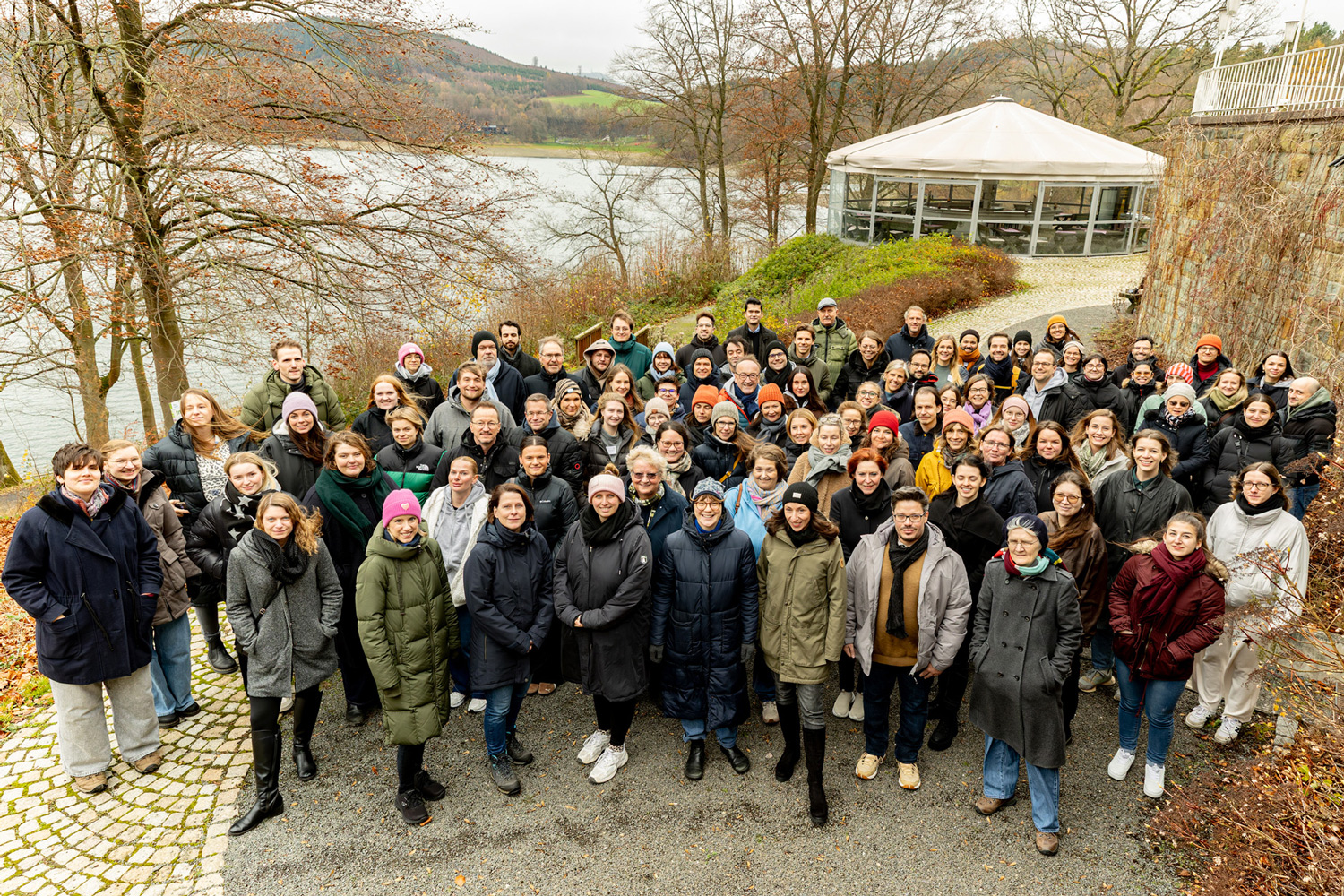
Three days of discussion and community: From November 18th to 20st 2025, members of Collaborative Research Center (CRC/TRR) 289 “Treatment Expectation” gathered for a retreat in Meschede. In addition to the teams from the existing projects, five new research groups also presented their work, which they will contribute to the CRC as affiliated projects in the future.
“Thank you very much for your inspiring presentations and the engaging discussions!” With these words, Prof. Ulrike Bingel, as the event’s chair, bid farewell to the members of the Collaborative Research Center “Treatment Expectation” after three intensive and productive days in Meschede. Approximately 100 researchers presented the current status of their research projects, discussed their findings and exchanged ideas and methodologies.
The event kicked off with an opportunity for the early-career researchers to get to know one another: in a sort of speed-dating session, they introduced themselves and their research to each other. Afterward, the researchers learned about mentoring, funding opportunities, lab rotations and science communication. Common myths about working in research were also discussed: For example, do researchers show an above-average level of dedication to their work? And is teaching really less important than research?
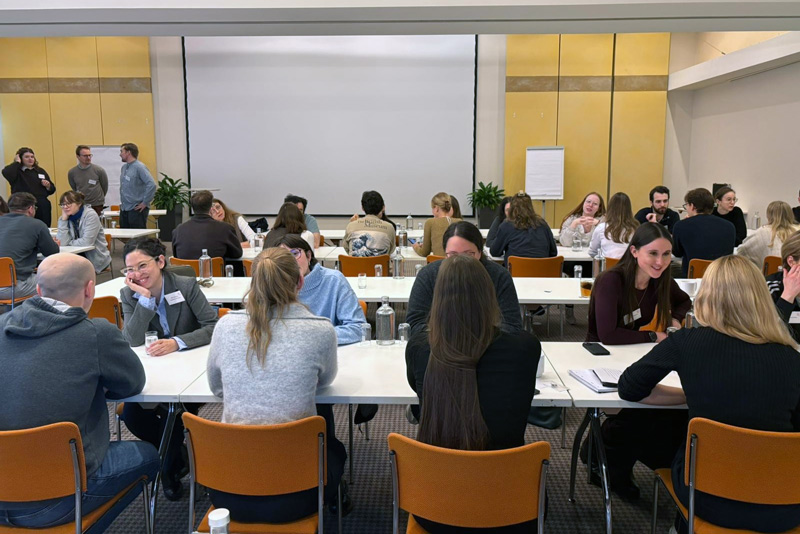 Kickoff: Get to know each other and network at the speed dating event for early-career researchers
Project updates and exchange of experiences
The main part of the event consisted of updates from the projects. One year after the start of the CRC’s second funding period, all working groups reported on the current status of their research: What progress has been made? What obstacles might still stand in the way? How can these be overcome? And what new research questions and opportunities arise from the knowledge gained?
Ample time was set aside for discussions and one-on-one conversations – immediately following the update talks, but especially during the subsequent poster session, where project participants provided even deeper insights into their work. A key objective of the regular retreat is to enable researchers to benefit from the experiences and ideas generated by other projects within the research network – and, thanks to the transregional nature of the Collaborative Research Center (CRC/TRR), even across different locations. Opportunities for collaboration and proposals for future, new projects were also discussed.
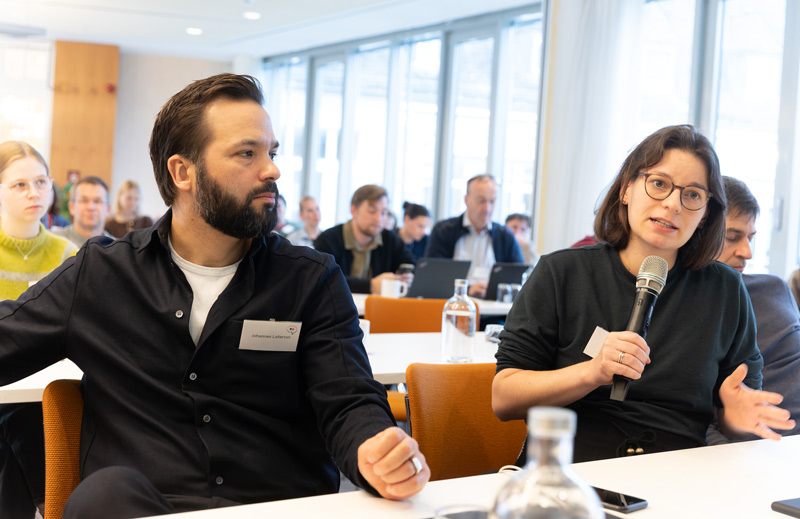 Project updates, discussion and brainstorming: Prof. Johannes Laferton and Dr. Livia Asan at the 2025 retreat
New impulses from affiliated projects and presentations
Particular attention was given to five groups that will contribute their work to the CRC/TRR 289 as affiliated projects in the future. For example, PD Dr. Gertraud Gradl-Dietsch and Dr. Marcel Wilhelm are investigating how to improve the observer-assessment of depression. Prof. Stefan Salzmann and Prof. Johannes Laferton, along with their teams, are investigating how patients’ expectations regarding treatment can be optimized so that they recover more quickly after heart or knee surgery. Prof. Tobias Kube’s research group is focusing on the language used by doctors and its impact on patients’ concerns and hopes. Dr. Christopher Milde and his team are researching how our perception of pain depends on other sensations.
The program also featured two additional presentations that focused on the transfer of knowledge generated within the CRC. Prof. Christian Büchel, the CRC’s Hamburg site representative, spoke about the enormous publication costs associated with well-known journals published by traditional academic publishers and presented alternative publication systems based on nonprofit organizations. Prof. Markus Ploner of the Technical University of Munich spoke about open science, which aims to make research results fully transparent, accessible, and understandable. The CRC/TRR 289 supports open science practices in research.
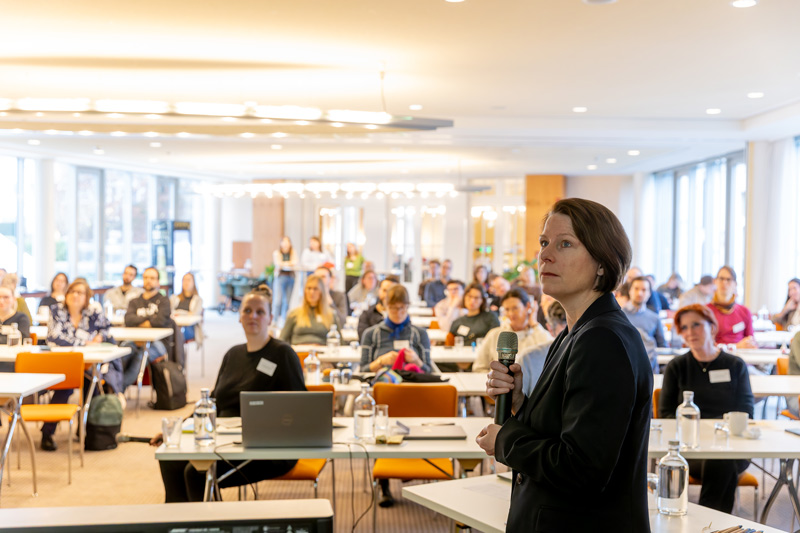 Insights: CRC Spokesperson Prof. Ulrike Bingel addresses the plenary during Prof. Markus Ploner’s lecture.
Team-building activities to get to know one another and network – including the Patient Advisory Board
The joint outdoor event demonstrated just how dynamically the Collaborative Research Center “Treatment Expectation” is growing: More than a half of the participants attended the retreat for the first time. This made the team-building activities – designed to help participants get to know one another and network across teams and locations – all the more valuable. What stood out to the experienced coaches was that the atmosphere remained very collegial and constructive throughout all the exercises – a good sign of the strong sense of unity within the research network.
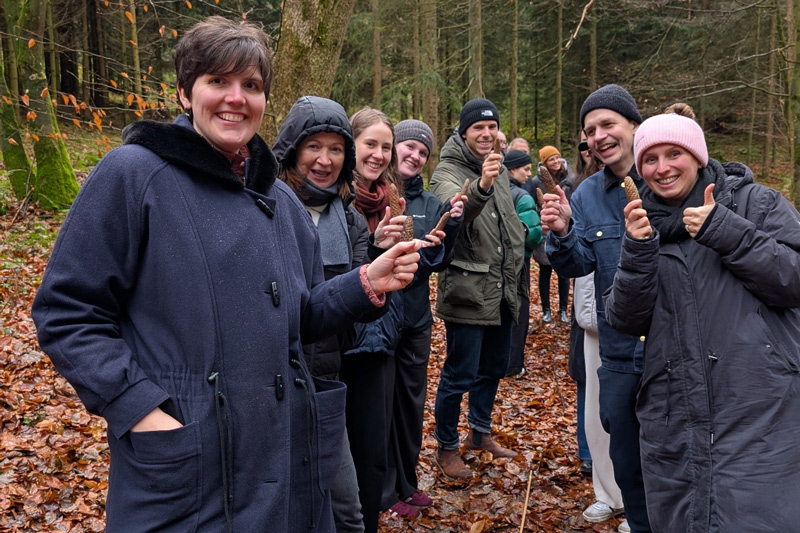 Teamwork: The “Fichtenzapfen” team wins the outdoor challenge
Members of the Patient Advisory Boards (PAB) also participated for the first time. This advisory board brings the perspective of those affected into the research conducted by CRC/TRR 289, discusses current issues related to the research process, advises on and supports various projects throughout all phases. At the team event and during one-on-one discussions, researchers and the PAB members were able to exchange ideas and plan joint projects.
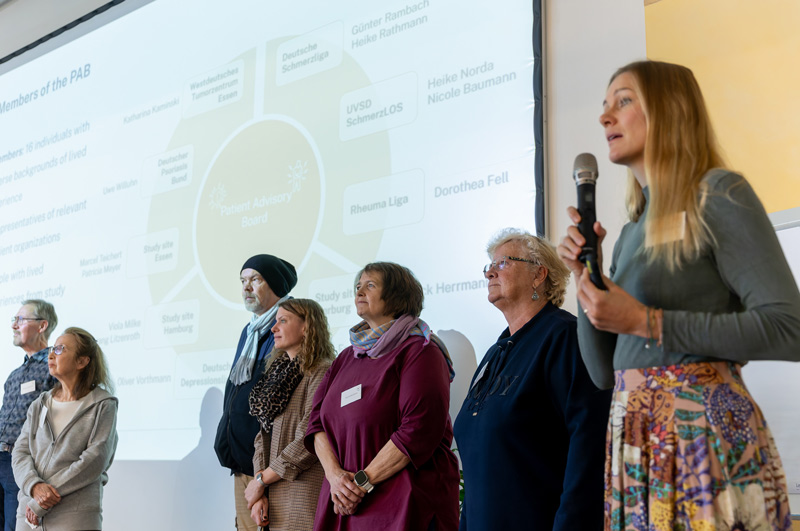 Key voices: Introducing the CRC/TRR 289 Patient Advisory Board
Upon conclusion of the three-day retreat, the spotlight once again turned to the early-career researchers. The traditional Best Paper Award was presented four times this year: to Dr. Andreas Strube from project A11, Dr. Lieven Schenk from project A02, Justine Schmidt from project A11 and Stefanie Hölsken from project A12. Selecting the award recipients was difficult, as Prof. Ulrike Bingel noted: “We could have recognized many more publications by our ECRs that emerged from our first funding period!”